Category Archives: Uncategorized

When is a pitch not a pitch? When it’s over before it’s begun.

Here’s a depressing insight about pitching from an experienced TV insider:

“You know that ten minute chat before the pitch starts, that bit when you talk about your flight and the traffic and the kids. That’s the pitch. That’s when the commissioner is working out whether you are someone they can do business with.”

So the crucial decision is made during the small talk.

Good chat, smiles = let’s hear what you’ve got.

Bad chat, frowns = let’s get this over with.

It seems a pretty dumb way to do business, so what can we do about it?

If you are pitching: think about your chat. I don’t mean rehearse it or try to be someone you’re not. Both will ring false and that’s a terrible impression to make. Instead, do your homework about the person you’re pitching to and ask a conversational question about some piece of work they’re likely to be proud of. So, for example “how’s [XXX] doing, I’ve seen some great reviews.” This gives them a chance to feel good and some of that good vibe will rub off on you. It also shows you’re interested in what works for them, not just pushing your own agenda.

If you are being pitched to: I’m tempted to say “grow up”. But let’s be honest, most of us like working with people we feel comfortable with. It’s called “in-group bias”.

But can you think of a better way to let unconscious biases flourish than to allow yourself to be swayed by pre-pitch chat? And can you think of a better way to undermine diversity than to ignore an unconscious bias in favour of people who look or sound like you?

Before the pitch try saying to yourself “Whether I like this person or not has no bearing on the quality of his/her idea.”  Better still you could say to yourself “If I don’t feel comfortable with this person it maybe because he/she sees the world differently to me. Maybe their idea will push me out of my comfort zone.” 

Just by acknowledging your own biases, you’re half way to beating them.

Does this kind of pre-pitch chat happen in other industries? How does anyone else deal with it?

Also useful – 6 Questions Any Pitch Should Answer  and Pitch Perfect.

Image from Pixabay.com

Hey, I’ve got a great story…

Now, I’ve bought fifteen seconds of your attention. You’re hooked by the promise of a great story, with action and heroes. But why do stories work on us like this?

I’ve just finished two days storytelling training with a large media company and I’ve never known sessions to go so well. These were all professional storytellers but it was like everyone instinctively got it and still wanted to learn more.

Now I think I know why. So let me tell you a story…

Think of a time when you were new in a job. You settled in to an established order and tried to follow what people around you were doing. But then you found problems you couldn’t resolve, things that didn’t make sense. Surely there had to be a different way to do this? You tried, but nothing worked at first. You kept trying. Gradually a shape emerged from the chaos. After a lot more trying, you established a new and better way.

I’m describing the classic hero’s journey, from Homer’s Iliad to Homer Simpson. I’m also describing the way our brains make sense of a confusing world: assemble evidence, spot things that don’t fit, resolve problems by finding a new theory. It’s thesis, antithesis and synthesis. Or…

Act One: the world has an established order but something doesn’t fit

Act Two: the problem can’t be ignored, you have to act

Act Three: through trial and error you realise what needs to change

Act Four: you struggle to put this new knowledge into action

Act Five: a new order emerges where everything makes sense

And we all live happily ever after. At least, until the next problem emerges.

This is the story of Hamlet, Jane Eyre and Breaking Bad, and it’s the story of your day at work too. It’s the story of anyone trying to make sense of their world. This is why storytelling works – for professional writers or anyone who needs to communicate with passion about their work. We tell stories in the same way as we make sense of the world and our own place in it. This is why, a few seconds in to any conversation about work, I find myself telling stories to make my point.

“All of our storytelling theories have one thing in common,” writes John Yorke*, who has studied dozens of them. “All revolve around one central idea: the incomplete is made complete, sense is made.”

“Storytelling is the dramatisation of the process of knowledge assimilation.”

So long as you remain curious about the world or determined to change it for the better, you will be hooked by stories.

I think, therefore I am… a storyteller.

*Into the Woods, How Stories Work and Why We Tell Them, by John Yorke

Click here if you’d like to watch the storytelling training I delivered last week.

Do you suffer from Micro-phobia? (Fear of a live Mic)

microphone-1209816_1920
Micro-phobia: fear of a live mic. Photo from Pixabay.com

I interviewed an amazing entrepreneur last week. She’d grown up in Delhi, where she experienced the daily abuse women suffer in parks and on public transport. Surely technology could make women’s lives safer, she thought. So she gave up a well paid job to develop an Internet-of-Things solution to a problem that she just couldn’t ignore any longer. Great story! I get out the mic and the interview starts:

Me: “So what made you give up a well paid job and become an innovator?”

Her: “Well, it was such a high value proposition, I thought it was a very strong use case…”

What? WHAT? No, no, no. Stop, please stop.

I switched off the mic after a minute and told her she was throwing away the interview. We started again, I got my quotes. But if it had been a live interview, it would have been a terrible waste of a good story. Nobody would have kept listening past the first thirty seconds.

Afterwards I gave my entrepreneur some advice on dealing with Micro-phobia (fear of a live mic).

  1. Ignore the microphone – talk to the person behind it. The mic stresses you out, so you reach for safety. You imagine you should talk like an accountant because you’re talking about business. But unless you connect on an emotional level, you’re just more words in a noisy world. Talk with the same passion you had before the mic went live, talk like you’re just talking to me.
  2. Use the fear – it makes you more human. Ok, you hate speaking in public, you’re not a polished performer. Even so, you’re still here, facing the live mic. That means what you’ve got to say must be important to you. People will pick up on this and respect you for it. Don’t be afraid to admit you’re nervous, slow down, stop and restate what you really mean if you find yourself wandering. This is how normal people speak.
  3. Find some teenagers and practise on them. Ring up your local 6th form college, ask if you can come and talk to their students about being an entrepreneur. If you can face thirty bored teenagers, you can face any live microphone with a bit more confidence.

How to be more innovative

“You must make some conscious and intelligent effort towards the future.”

Paul Mason – Innovate UK

I spoke to some of the UK’s brightest innovators, researchers and entrepreneurs, gathered in Manchester this week for the Innovate 2016 conference, to get their advice on how to be more innovative. First up, Tera Allas from McKinsey Global Institute on why diversity boosts innovation.


Next up, Asif Moghal from Autodesk’s Future of British Manufacturing Initiative, on how technology changes the way we innovate.

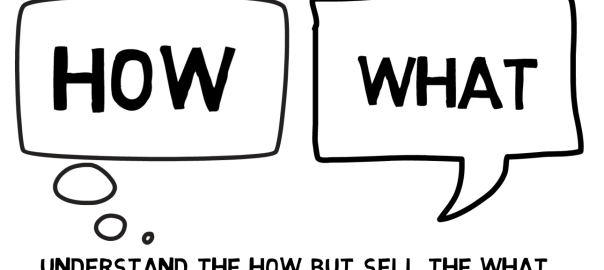
Sell people the what, not the how

“If you have a problem, if no-one else can help, and if you can find them, maybe you can hire….”

No, not The A-Team. A good facilitator.

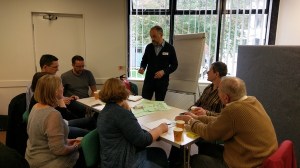
How do we prove the value of facilitators? Pic from Martin Gilbraith.

Where’s your next good idea coming from? How can you get your team to work together better? What direction should you be heading in and how can you overcome inertia? How can you tell your story so other people will listen?

If you find a good facilitator, you can tackle all these problems and more. You’ll feel like you’re making progress, getting your lightbulb moments. We – the facilitators – get a buzz from helping and the chance of repeat business. Win-win situation, no?

So why have I found it so hard to describe what I do and so hard to prove the value of a good facilitator?

Well, thanks to last Saturday’s gathering of the International Association of Facilitators I now have a clue. I got too close to the work, got too excited about the tools I’ve learned to use in the last five years. But there’s no point trying to sell people on how I would help them (for example, what tool I’d use in a workshop), because that’s just too technical.

They want to know what I can help them with, more specifically what problem I can help them solve. They don’t really care how I do it, so long as it works. And they won’t be searching online for solutions they don’t know exist yet – they’ll be searching based on the problems they’ve got.

Sell the what, not the howOur little IAF group set out to answer a specific question: how do we prove the value of what facilitators do? In the process, we reached this main insight: you have to understand how you’re going to help someone, but you should sell yourself based on what you can help them with. 

We also hit on some neat ways of demonstrating value:

  • Always get testimonials from happy customers
  • Use a “Before and After” survey to test attitudes in the group
  • Show how many repeat bookings you get (and don’t forget the ones you’ve helped so much they don’t need you to come back any more)
  • Ask your group to send you evidence of progress/impact a few weeks or months down the line
  • Use a live “trailer question” during the session to measure your impact
  • Make a video or photo record of your session, capturing the moment and its positive feelings
  • Set up a Facebook or LinkedIn group so the conversation runs on after your session
  • Tell your work like a story (but beware, you are not the hero of this story, your client is)
  • “Wrap up” your products based on the problems you can solve, not the techniques you can use

Based on that last point, I have totally redesigned my website landing page, so thanks Gary Austin for that bit of advice.

Here’s a link to two storytelling techniques which may help you tell stories where your client is the hero:

Credit: photo by Martin Gilbraith


Culture change from top to bottom – how the BBC did it.

Vistage – the business networking company – asked me to write for their blog on what I’d learned about culture change in my time at the BBC. Here are my observations, based on a front-row seat for the culture change that went into creating BBC North’s new home in Salford:

http://blog.vistage.co.uk/3-observations-of-business-culture-and-practical-tips-to-overcome-resistance

Pitch perfect – get ready for that vital presentation

A good pitch can be a life-changing moment – the start of a meaningful relationship with a new investor, supporter or customer. Here are a few tips on pitching style from a talk I gave for Manchester’s Business and IP Centre on 22nd Sept 2016.

Click here for slides from Pitch Perfect (7.4Mb download)

Click here to watch a 10 minute slideshow of the main points of the talk.

There’s more info on the techniques I used here:

Imagine a world without you – Make it real – Six questions your pitch should answer

And there are more presentation tips in the section on how to Sell your best ideas

You can find out how to book me as a speaker or trainer here.

Why bosses say they want radical new ideas but pick stale old ones

Psychologists have found a strong unconscious bias AGAINST creativity that pops up when people are evaluating new ideas. This means no matter how much your boss tells you he/she wants fresh thinking, their gut instinct makes them treat new ideas like a bad smell. Sound familiar?

Unconscious biases are preferences and prejudices that we don’t know we have. For example, you might be unconsciously wary of someone with Arab Muslim heritage – even though you’re not racist – simply because of all the terrible news coverage of terrorism since 9/11.

You can test for unconscious bias (links at the bottom if you’re interested), and so the authors of this study did exactly that. They tested if people unconsciously preferred practical ideas over more radical ones. Here’s what they found:

“Just as people have deeply-rooted biases against people of a certain age, race or gender that are not necessarily overt, so too can people hold deeply-rooted negative views of creativity that are not openly acknowledged.”

This hidden bias against creativity got worse when the test subjects were put into situations of uncertainty.

We all talk about the importance of creativity. But unless you’re the kind of person who loves uncertainty, you may unconsciously prefer ideas that are safe, unoriginal and practical. I reckon this is why bringing new ideas to life feels like such an uphill struggle.

The authors conclude “our results suggest that if people have difficulty gaining acceptance for creative ideas especially when more practical and unoriginal options are readily available, the field of creativity may need to shift its current focus from identifying how to generate more creative ideas to identifying how to help innovative institutions recognize and accept creativity.”

Here’s one technique that might help people around you be more accepting of your creativity – move your doubters from “How” to “Why”

Credit: “The Bias Against Creativity” by Mueller, Melwani & Goncalo

Test your own unconscious biases here.

Beginning, middle & end – with a twist

Remember playing the game “Consequences” at school? Here’s a twist on the Brainwriting tool, inspired by that playground game. I designed it for TV drama producers but it works really well for any kind of imaginative storytellers.

Everyone starts with their own grid of nine boxes on a big piece of paper, but the first row is labelled “Beginning”, the middle row is called “Middle” and the last row is “End”.

Everyone starts silently writing three different beginnings for a character’s story.  These could be an accident, a lottery win, a death in the family – what writers call an “inciting incident” or trigger. When you’ve got three, you put your paper in the middle of the table and swap with someone else.

Pick up the new sheet and read someone else’s “Beginnings”. Now write down your ideas for how the character reacts. Finish all three “Middles” and pass the paper back, then pick up another.

Now you’re on the “Ends”. Read someone else’s Beginning and Middle – then work out how this mini story-arc could resolve? When everyone’s finished, get people to share their favourite story arcs with the group.

Horst Geschka invented Brainwriting to help engineers innovate their products. I gave it a twist for a colleague who makes TV soap opera – and guess what, it works well for both.

Happy endings all round!

(Over a hundred more techniques like this one in my new book Be Creative Now!)

Prepare, write and deliver better presentations

Fifteen minute masterclass in doing good presentations. This slideshow covers how to prepare yourself for a good presentation; tips for introverts and extroverts; how to think and write clearly and how to use some of the tricks of great speakers to make your message stick.

This slideshow includes several techniques that you’ll find elsewhere on the website:

Ethos, pathos and logos.

Make it original

Thinking in threes

Omission

Remember, it’s no good having a great idea if you can’t get anyone to listen. So check out these tools for selling your best ideas to the people who matter most.

Credit: thanks to Garfilld88 for the video of Nelson Mandela’s trial speech. Image copyright: Jigsaw, PolyGram Filmed Entertainment, TED.com, Morgan Creek Productions and BBC.